Sunday, April 7, 2013
Behind Closed Doors (John 20:19-31)
Behind Closed Doors from Joseph Taber on Vimeo.
John 20:19-31
19It was still the first day of the week. That evening, while the disciples were behind closed doors because they were afraid of the Jewish Authorities, Jesus came and stood among them. He said, “Peace be with you.” 20After he said this, he showed them his hands and his side. When the disciples saw the Lord, they were filled with joy. 21Jesus said to them again, “Peace be with you. As the Father sent me, so I am sending you.” 22Then he breathed on them and said, “Receive the Holy Spirit. 23If you forgive anyone’s sins, they are forgiven; if you don’t forgive them, they aren’t forgiven.”
24Thomas, the one called Didymus, one of the Twelve, wasn’t with the disciples when Jesus came. 25The other disciples told him, “We’ve seen the Lord!”
But he replied, “Unless I see the nail marks in his hands, put my finger in the wounds left by the nails, and put my hand into his side, I won’t believe.”
26After eight days his disciples were again in a house and Thomas was with them. Even though the doors were locked, Jesus entered and stood among them. He said, “Peace be with you.” 27Then he said to Thomas, “Put your finger here. Look at my hands. Put your hand into my side, no more disbelief. Believe!
28Thomas responded to Jesus, “My Lord and my God!!
29Jesus replied, “Do you believe because you see me? Happy are those who don’t see and yet believe.”
30Then Jesus did many other miraculous signs in his disciples’ presence, signs that aren’t recorded in this scroll. 31But these things are written so you will believe that Jesus is the Christ, God’s Son, and that believing, you will have life in his name.
This is the Word of the Lord,
Thanks be to God
We have seen the Lord.
Last Sunday we proclaimed proudly “The LORD is Risen!” He is Risen indeed! We read it, we said it, we sang it, we put our faith into the testimony of the women who went to the Tomb.
And yet, here we are, on the evening of that same day. These unnamed and unnumbered followers of Jesus are gathered together, and either word hasn’t gotten around to this particular group of disciples, or they’re still stuck on the idle talk version of the story.
We have seen the Lord, and yet we gather behind closed doors.
The disciples, we are told, have closed the doors around themselves because they are afraid of the Jewish authorities, afraid that perhaps, unsatisfied with the leader of their little movement, they will come next for his followers. They are behind closed doors because perhaps they are still anonymous enough that if they keep their heads down they won’t be recognized on the streets of their holy city as being one of those people, one of his people. This group of Jesus’s followers have closed themselves in because even if it’s too late for those who are known as the Twelve, whom Jesus called friends, perhaps the outer circles of Jesus’s followers can still escape the persecution that sent their Lord to the cross and to his grave. Perhaps, behind these closed doors, the authorities whom they fear might not find them.
We have seen the Lord, and yet we gather behind closed doors, because what lies outside those doors scares us.
Behind closed doors, we may not be safe, but we are at least a little hidden from the festivals in which we dare not partake. These festivals remember when we were slaves in Egypt, when God passed over the homes that were marked by the blood of a lamb, when God struck down the firstborn of every Egyptian household. These festivals cannot enter through these doors. We have closed them out because the one we have called Firstborn of all Creation has also been struck down, and we know we are still in bondage. We gather behind closed doors because outside is a world where our God has been executed.
We have seen the Lord, and yet we gather behind closed doors, because what lies outside those doors scares us. But Jesus stands among us.
The Lamb of God, whose life blood ran out along a spear-forged path only a few days ago, stands among us, and speaks to our disbelieving fear, “Peace be with you.”
Lest we believe that the darkness of what we call Good Friday has been erased, Jesus shows us his hands. Lest we believe that the light that shows forth on our Easter evening is some sort of trick, Jesus shows us his side. Lest we believe that our whole world is lost to chaos and fear, Jesus says to us, “Peace be with you.”
We have seen the Lord, and yet we gather behind closed doors, because what lies outside those doors scares us. But Jesus stands among us, resurrecting faith in the one he calls Father.
Jesus said to the disciples again, “Peace be with you. As the Father sent me, so I am sending you.” Then he breathed on them and said, “Receive the Holy Spirit. If you forgive anyone’s sins, they are forgiven; if you don’t forgive them, they aren’t forgiven.”
Behind these closed doors Jesus stands among us, speaks to us, breathes on us, and empowers us to enter into the world from which we have tried to hide. The same breath that filled the dust of Adam with life, the same Spirit that hovered over the waters at creation, the same Son who died on the cross, the same voice that on Easter Morning called Mary by name charges us to step out from behind our closed doors and release people from their bondage to sin.
When we think of sin, it’s easy to picture a long list of what we have done wrong, but the writer of John’s gospel has a different understanding of sin. For John, sin isn’t an action, it’s a reality that holds us captive from the God who would stand among us. Immersed in John’s understanding, “Forgiveness of sins is not about the act of penance in relation to individual deeds. Rather, forgiveness of sins is the community’s Spirit-empowered mission to continue Jesus’ work of making God known in the world.1” Jesus breathes on them, charges them to receive the Holy Sprit, and make God’s intervention known throughout the whole world. Empowered by the Holy Spirit, the disciples are filled with joy, and can take their testimony out from behind the closed doors.
We have seen the Lord, and yet we gather behind closed doors, because what lies outside those doors scares us. But Jesus stands among us, resurrecting faith in the one he calls Father. Our God will not be shut out.
Our God will not even be shut out by Thomas, the one called Didymus, one of the Twelve. He too has seen the Lord, crucified, dead, and buried. Thomas, whose memory is still wet from his master kneeling down and washing his feet, still hears the disciples’ testimony as idle talk. He wasn’t with them, gathered behind those closed doors, when Jesus came.
The other disciples told him, “We have seen the Lord!” But Thomas replied, “Unless I see the nail marks in his hands, put my finger in the wounds left by the nails, and put my hands in his side, I won’t believe.”
Doubting Thomas we call him. We call him. Scripture gives us a list of his aliases: Thomas, the one called Didymus, one of the Twelve. But never called the one who doubted, because Thomas only demands what the other disciples have already received: a physical encounter with the risen Christ.
Eight days after their encounter with the risen Christ, his disciples were again in a house, and Thomas was with them.
We have seen the Lord, and yet we gather behind closed doors, because what lies outside those doors scares us. But Jesus stands among us, resurrecting faith in the one he calls Father. Our God will not be shut out, not even by us.
Even though the doors were locked, Jesus entered and stood among them. Even though we have seen the Lord, we still gather behind closed doors. This time, we go even farther, they are locked behind us so that maybe the darkness can be kept outside.
But this is the Gospel according to John, and in the Gospel according to John, a light shines in the darkness, and the darkness doesn’t extinguish the light.
Even though the doors are locked, in a futile attempt to hold back the darkness, the light of the world enters and stands among us. The light which shines in the darkness will not be shut out. Even though we have retreated further into our fear, even though we have settled back into the bondage of our sin, even though we hide from the filling joy of Easter for fear that we will just be emptied again at another crucifixion, Jesus enters and stands among us, breaking through the barriers we have set up because we think they protect us, when all they do is separate us from God. But Jesus enters and stands among us, because our God will not even be shut out by us.
He said, “Peace be with you.” Then he said to Thomas, “Put your finger here. Look at my hands. Put your hand into my side. No more disbelief. Believe!”
Lest Thomas believe the darkness of Good Friday has been erased, Jesus says “Put your finger here. Look at my hands.” Lest Thomas believe that the light that shines forth throughout our Easter season is some sort of trick, Jesus says, “Put your hand into my side.” Lest we believe our whole world is lost to chaos and fear, Jesus says, “No more disbelief. Believe!”
We have seen the Lord, and yet we gather behind closed doors, because what lies outside those doors scares us. But Jesus stands among us, resurrecting faith in the one he calls Father. Our God will not be shut out, not even by us. God is with us always.
Without even waiting to touch the wounds, Thomas responds to Jesus, “My Lord and my God!” His experience of Christ is undeniable, and his belief is immediate. Thomas, who still believed himself captive to sin, is set free by the God who enters through a locked door and presents himself with his wounds still open, so that Thomas is presented with the reality of God’s refusal to abandon him. Thomas, the one called Didymus, one of the Twelve, takes his testimony beyond the disciples’ assertion of having seen the Lord, and intensifies it into a confession of belief in a God who is with him always. Thomas, whom we called Doubter, responds to Jesus, “My Lord and my God!”
Jesus replies, with a knowing smile I imagine, “Do you believe because you see me? Happy are those who don’t see and yet believe.” It is easy to believe when we see God standing before us, shining in the glory of Easter’s resurrection. It is easy to believe when the blessings of God are so evident in our lives. It is easy to believe when all seems right with the world.
But that is not always the season in which our narratives find us
We gather behind closed doors when we are in a season of overwrought obligations, or a season of legal troubles, or a season of addiction, or of families that we are trying to hold together with both hands. When we are in seasons of locks which separate us, whether they are locks forged in despair, or anger, or fear, then it is hard to believe. When we are in seasons that have caused us to close ourselves off, whether it’s anxiety over not having enough money, or feeling lost and directionless, or even being constantly overwhelmed by the pressures of the grades you’ve been told will shape the rest of your life, then it is hard to believe. Even when it is hard to believe, and irrespective of the anxiety that we think locks us away from God, Jesus enters and stands among us.
We have seen the Lord, and yet we gather behind closed doors, because what lies outside those doors scares us. But Jesus stands among us, resurrecting faith in the one he calls Father. Our God will not be shut out, not even by us. God is with us always, revealed in Christ our Lord.
If you want to know what lengths God will traverse in order to stand among us, look at the life of Jesus: Through all the wonders, all the people he heals, his life leads him not to the foot of the cross, but to be executed upon it, crying out of the depths of despair that too often our brothers and sisters, or perhaps we ourselves, also have known, “My God, my God! Why have you abandoned me?” When that death could not contain him, he rose again from the dead, and when we gather behind closed doors, even though they may be locked, they will not stand in the way of the God who descended into hell so that we might never experience total separation from God. These locks will not shut out the God who broke the power of sin and death so that we might walk in newness of life. God does not and will not leave our side, even though darkness may close in all around us. Even if we feel cut off from Easter’s joy, God comes in to where we have locked ourselves away and says “Peace be with you.”
We have seen the Lord, and yet we gather behind closed doors, because what lies outside those doors scares us. But Jesus stands among us, resurrecting faith in the one he calls Father. Our God will not be shut out, not even by us. God is with us always, revealed in Christ our Lord, made known through the power of the Holy Spirit.
And that unfailing love which refuses to leave our side, sends us out into the world, empowered by the Holy Spirit, so that we participate in the process of loving God’s people, and so that we may tell all of the people of God that we no longer need to gather behind closed doors, that through Jesus the Christ, who is God’s Son, our refrain has been transformed:
We have seen the Lord, and so we gather around a table, because the community gathered here is founded on love. And Jesus stands among us, resurrecting faith in the one he calls Father. Our God will not let us go, even though we are broken. God loves us always, made known in Christ through the power of the Holy Spirit.
Amen.

Sunday, March 31, 2013
Happy Easter
Death be not proud, though some have called thee
Mighty and dreadful, for, thou art not so,
For, those whom thou think'st, thou dost overthrow,
Die not, poor death, nor yet canst thou kill me.
From rest and sleep, which but thy pictures be,
Much pleasure, then from thee, much more must flow,
And soonest our best men with thee do go,
Rest of their bones, and souls delivery.
Thou art slave to Fate, Chance, kings and desperate men,
And dost with poison, war, and sickness dwell,
And poppy, or charmes can make us sleep as well,
And better than thy stroke, why swell'st thou the?
One short sleep past, we wake eternally,
And death shall be no more; death, thou shalt die.
- John Donne, Holy Sonnet X
Mighty and dreadful, for, thou art not so,
For, those whom thou think'st, thou dost overthrow,
Die not, poor death, nor yet canst thou kill me.
From rest and sleep, which but thy pictures be,
Much pleasure, then from thee, much more must flow,
And soonest our best men with thee do go,
Rest of their bones, and souls delivery.
Thou art slave to Fate, Chance, kings and desperate men,
And dost with poison, war, and sickness dwell,
And poppy, or charmes can make us sleep as well,
And better than thy stroke, why swell'st thou the?
One short sleep past, we wake eternally,
And death shall be no more; death, thou shalt die.
- John Donne, Holy Sonnet X
Sunday, February 17, 2013
Iconoclasm-clasm
Protestant Churches are, by and large, visually bland.
I've seen some beautiful woodworking in churches, and some lovely architecture, perhaps there's a cross at the front, or some carvings on the pulpit or lectern. But by and large, the walls are pretty bare. There's nothing to look at, the average Mainline Protestant worship service uses exactly one sense: Hearing.
Churches, however, used to be filled with images, some still are. I had the opportunity to visit Holy Apostles Orthodox Church for a wedding a few years ago, and I was absolutely struck by the beauty and fullness of their worship space. Each sense was engaged: hearing of the music, liturgy, and reading and proclamation of the Word; the smells of their incense; the touch of the think carpet on which we stood, and at times sat; the taste of the bread they shared with their visitors as an expression of hospitality; It was one of the most significant worship experiences of my life.
So why are they so different?
A few hundred years ago, someone took a look at the ten commandments, one of which (The first or second, depending on your tradition) says that you shall not make an image of any living thing. Some folks took this more literally than others, resulting in an iconoclasm, or a destruction of images. This happened a couple of times throughout church history, and was always done in the name of ending idolatrous practices.
It left our protestant churches with only the written or spoken word as an acceptable form of expression. This habit has not served us well.
Riding the back of the printing press, we pushed words to the forefront of culture, and the Protestant church has gotten really good at words over the years, championing literacy and poetry for the glory of God.
But we've forgotten that God also created our other senses, and gave us artistic abilities which God expects us to use to glorify God.
Perhaps it is time for a destruction of the idea that images are bad. Perhaps it's time to say demand more than hearing the word, perhaps we are entering a time of iconoclasm-clasm, when we adopt our ancient role as patrons of the arts, knowing that God is not captured in any medium, not even in the words we love so much, but portions of God can be revealed to all our senses: images, smells, textures, tastes, and yes, the sounds of music and the hearing of God's Word for us.
Monday, February 11, 2013
Interim Pope?
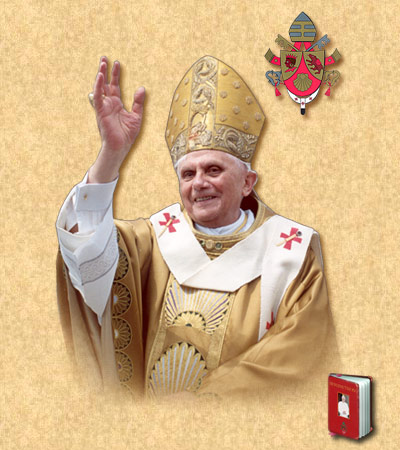
Today, as you know, Pope Benedict XVI announced his resignation effective at the end of February. There are many different responses to this act of stepping down, including questions about whether he always intended to be an "Interim Pope."
For my money, I don't think Pope Benedict XVI saw his calling to that position as an interim one. I ran across this blogpost on Facebook shortly after I heard the news. The post posits that stepping down was the act of a faithful man who recognizes that he can no longer faithfully execute his ministry, and that perhaps we can also be called to step down from what has been a long and fruitful calling as well.
I've been working with St. Andrew's Presbyterian Church since May of 2012, and we've been going through a visioning process the last month or so to figure out where the church should go next. One of the discussions we had was of expanding our ministry with older adults, the saints of the church who have been leaders for decades.
If we move forward with that ministry, I think part of it needs to be teaching the kind of faith exhibited by Pope Benedict XVI in his willingness to step down. Because if we hold on to our past we never give the future an opportunity to develop.
As we move forward, we have to honor the contributions of those who have been active leaders, but we also have to teach those leaders how to pass on the torch so that their organization can continue to grow with each new generation, and not be tied to one group.
It's easy for a young person to say, and maybe I'll feel differently when I'm on the other end of this equation, but at some point the baton has to be passed so that the race may continue. Giving up that control is scary, because sometimes it won't get picked up, and frequently won't get picked up in the same way.
But remember the truth of the resurrection. Death is not something we need to fear, neither is the decline that leads to it. Because that death is not the end of our story. As programs die, new ones spring up to do different work, the needs of the community shift, and to hold on to old solutions when they no longer fit doesn't make sense.
So Pope Benedict XVI, this protestant hopes that your example rings throughout the universal Church, and that we examine if we are called to a specific ministry, or if we are called to step down from our positions and trust God to act through others.
What do y'all think? Is his resignation an act of faith or a cop-out? An example to follow or an illustration of the ailing of the church as an illustration? Let me know in the comments!
 |
| Source: http://www.vatican.va/holy_father/benedict_xvi/index.htm |
For my money, I don't think Pope Benedict XVI saw his calling to that position as an interim one. I ran across this blogpost on Facebook shortly after I heard the news. The post posits that stepping down was the act of a faithful man who recognizes that he can no longer faithfully execute his ministry, and that perhaps we can also be called to step down from what has been a long and fruitful calling as well.
I've been working with St. Andrew's Presbyterian Church since May of 2012, and we've been going through a visioning process the last month or so to figure out where the church should go next. One of the discussions we had was of expanding our ministry with older adults, the saints of the church who have been leaders for decades.
If we move forward with that ministry, I think part of it needs to be teaching the kind of faith exhibited by Pope Benedict XVI in his willingness to step down. Because if we hold on to our past we never give the future an opportunity to develop.
As we move forward, we have to honor the contributions of those who have been active leaders, but we also have to teach those leaders how to pass on the torch so that their organization can continue to grow with each new generation, and not be tied to one group.
It's easy for a young person to say, and maybe I'll feel differently when I'm on the other end of this equation, but at some point the baton has to be passed so that the race may continue. Giving up that control is scary, because sometimes it won't get picked up, and frequently won't get picked up in the same way.
But remember the truth of the resurrection. Death is not something we need to fear, neither is the decline that leads to it. Because that death is not the end of our story. As programs die, new ones spring up to do different work, the needs of the community shift, and to hold on to old solutions when they no longer fit doesn't make sense.
So Pope Benedict XVI, this protestant hopes that your example rings throughout the universal Church, and that we examine if we are called to a specific ministry, or if we are called to step down from our positions and trust God to act through others.
What do y'all think? Is his resignation an act of faith or a cop-out? An example to follow or an illustration of the ailing of the church as an illustration? Let me know in the comments!
Wednesday, February 6, 2013
Old Paths, New Shoes
"I love typing on my iPad. It's like I'm on a typewriter. The forced pacing makes me choose words more carefully." Ethan Cross
My friend Stephen recently posted this on his blog. You should read it. Go ahead. I'll wait.
Back? Good.
The thing Stephen fails to mention is that neither he nor I carved that path into the grass. We both inherited it from the hundreds of Bailey Boys who had gone before. I still stand by my statement that I made those seven years ago when he was a freshman and I was a not-as-smart-as-I-thought-I-was Sophomore: Presbyterian College should have planned sidewalks around the paths students take, rather than trying to hold them to paths that don't always make sense.
Because we've inherited a system of paths from those who have gone before, and we don't always take the time to figure out if the solutions that were good and faithful when they were put in place answer the issues we face now. Our culture has changed significantly from when all these traditions started, and we need to remember why those sidewalks were put there, and why other sidewalks were not built.
Perhaps some people would rather have a dirt path that has been worn down by thousands of feet saving fifteen seconds a trip than have a polished sidewalk.
This brings me to the quotation that began this post. With regards to iPads and typewriters, it's not the technology that is important, it's the pacing. Both mediums (touchscreen and levered keys) develop a very specific, and slightly slower, rhythm to them, and makes the time spent on one's words a little more dear.
We are exploring new world in this time of change within the church, but we're also facing problems older than the pews in Anderson Auditorium at Montreat.
For those who don't drink that particular brand of kool-aid, Bob Tuttle has a famous speech about the pews being older than your grandmother.
So we've got these paths in which we move, and we've got new ways of moving through them, whether a new student on a dirt path, or an iPad typing with the rhythm of a manual typewriter, or a church facing an uncertain future.
Stephen, my question to you, and to the rest of the internet, is not just where is God directing the traffic, but where is God already working, waiting for us to walk the old path with our new shoes?
My friend Stephen recently posted this on his blog. You should read it. Go ahead. I'll wait.
Back? Good.
The thing Stephen fails to mention is that neither he nor I carved that path into the grass. We both inherited it from the hundreds of Bailey Boys who had gone before. I still stand by my statement that I made those seven years ago when he was a freshman and I was a not-as-smart-as-I-thought-I-was Sophomore: Presbyterian College should have planned sidewalks around the paths students take, rather than trying to hold them to paths that don't always make sense.
Because we've inherited a system of paths from those who have gone before, and we don't always take the time to figure out if the solutions that were good and faithful when they were put in place answer the issues we face now. Our culture has changed significantly from when all these traditions started, and we need to remember why those sidewalks were put there, and why other sidewalks were not built.
Perhaps some people would rather have a dirt path that has been worn down by thousands of feet saving fifteen seconds a trip than have a polished sidewalk.
This brings me to the quotation that began this post. With regards to iPads and typewriters, it's not the technology that is important, it's the pacing. Both mediums (touchscreen and levered keys) develop a very specific, and slightly slower, rhythm to them, and makes the time spent on one's words a little more dear.
We are exploring new world in this time of change within the church, but we're also facing problems older than the pews in Anderson Auditorium at Montreat.
For those who don't drink that particular brand of kool-aid, Bob Tuttle has a famous speech about the pews being older than your grandmother.
So we've got these paths in which we move, and we've got new ways of moving through them, whether a new student on a dirt path, or an iPad typing with the rhythm of a manual typewriter, or a church facing an uncertain future.
Stephen, my question to you, and to the rest of the internet, is not just where is God directing the traffic, but where is God already working, waiting for us to walk the old path with our new shoes?
Sunday, February 3, 2013
#Witness
#Witness from Joseph Taber on Vimeo.
Isaiah 43:8-13
8Bring out the blind people
who have eyes,
the deaf ones who have ears.
9All the nations are gathered together,
the peoples are assembled.
Which of them announced this?
Who predicted to us the past events?
Let them bring their witnesses
as a defense;
let them hear and say, “It’s true!”
10You are my witnesses, say the LORD,
my servant whom I chose,
so that you would
know and believe me
and understand that I am the one.
Before me no god was formed;
after me there has been no other.
11I, I am the LORD,
and there is no savior besides me.
12I announced, I saved, I proclaimed,
not some stranger among you.
You are my witnesses, says the LORD,
and I am God.
13From the dawn of time, I am the one.
No one can escape my power.
I act, and who can undo it?
This is the Word of the Lord,
Thanks be to God
John 9:1-7, 24-38
1As Jesus walked along, he saw a man who was blind from birth. 2Jesus’ disciples asked, “Rabbi, who sinned so that he was born blind, this man or his parents?”
3Jesus answered, “Neither him nor his parents. This happened so that God’s mighty works might be displayed in him. 4While it’s daytime, we must do the works of him who sent me. Night is coming when no one can work. 5While I am in the world, I am the light of the world.”
6After he said this, he spit on the ground, made mud with the saliva, and smeared the mud on the man’s eyes. 7Jesus said to him, “Go, wash in the pool of Siloam” (this word means sent). So the man went away and washed. When he returned, he could see.
24Therefore, [The Jewish Leaders] called a second time for the man who had been born blind and said to him, “Give glory to God. We know this man[Jesus] is a sinner.”
25The man answered, “I don’t know whether he’s a sinner. Here’s what I do know: I was blind, and now I see.”
26They questioned him, “What did he do to you? How did he heal your eyes?”
27He replied, “I already told you, and you didn’t listen. Why do you want to hear it again? Do you want to become his disciple too?”
28They insulted him: “You are his disciple, but we are Moses’ disciples. 29We know that God spoke to Moses, but we don’t know where this man is from.”
30The man answered, “This is incredible! You don’t know where he is from, yet he healed my eyes! 31We know that God doesn’t listen to sinners. God listens to anyone who is devout and does God’s will. 32No one has ever heard of a healing of the eyes of someone born blind. 33If this man wasn’t from God, he couldn’t do this.”
34They responded, “You were born completely in sin! How is it that you dare to teach us?” Then they expelled him.
35Jesus heard they had expelled the man born blind. Finding him, Jesus said, “Do you believe in the [Son of Man]?”
36He answered, “Who is he, sir? I want to believe in him.”
37Jesus said, “You have seen him. In fact, he is the one speaking with you.”
38The man said, “Lord, I believe.” And he worshipped Jesus.
This is the Word of the Lord
Thanks be to God
For two thousand years we’ve heard stories of the light of the world who came into the world. For two thousand years we’ve heard stories of darkness that cannot understand the light. For two thousand years we’ve heard stories of the blind and lame and sick and dying being healed.
And for two thousand years we have continued to have people grow sick, for two thousand years we have had people go blind. For two thousand years we have lived with the symptoms of our slavery to sin. For two thousand years we have wondered why it still hurts so much if our salvation has already been accomplished.
For two thousand years we have had brutal wars that spanned across the world that Jesus came to save. For two thousand years we have had diseases that spread throughout nations. For two thousand years we have had towns cry out in terror when their children were victims of violence in the very places we build to teach and protect them. For two thousand years we have witnessed loved ones descend into their own personal darknesses of fear, weakness, and despair.
And after two thousand years of hearing one story and having another thrust in front of us, it is easy to forget, to lose interest, to get distracted, and to no longer wish to see.
For two thousand years we have walked with these two stories competing to shape our reality. I don’t think that one story is more real than the other, I think it’s terribly insensitive to tell someone who is grieving, or hurting, or in pain that their suffering is not real. Because it is real. Sometimes the darkness is blindingly real. In those moments we need someone to tell us a story that we cannot believe, because we’re still blind, even though we have eyes, and we’re still deaf, even though we have ears.
The story we cannot believe comes to us from the great cloud of witnesses who hold us up, from those who have a vision of what God is doing in the world, and describe it to us, enabling us to move forward in service to a God who faithfully holds us up even when all we see is our stumbling.
Heirs to two thousand years of church missteps and faithfulness, You, St. Andrew’s Presbyterian Church, are God’s witnesses. God’s servant, whom he chose, so that you would know and believe God, and understand that God is the one.
Grammar nerd that I am, I love that while “witnesses” is plural, “servant” is singular. How’s that for what it means to be the church. As we discern what our guiding vision for the next chapter of our life together should be, we have in this passage a description of us both as individuals and as a collective.
Each of us, individually, are God’s witnesses, because not only have we seen the work that our God has done, and is doing, we are called to testify on God’s behalf. This courtroom language is not accidental, because like the man born blind, our truth, our whole truth, is that we were blind, and now we can see. Because the light of the world came into the world, and God’s mighty works are displayed in us.
But together, the people who are St. Andrew’s Presbyterian Church are God’s servant. As a body of witnesses, we are the body of Christ, not each going our own way, but coming together as a servant of our LORD, who’s mighty works are displayed throughout the history we have been given.
Verse 11 of our old testament lesson proclaims “I, I am the LORD, and there is no savior besides me.” This isn’t the word of a god who built a world and then let it spin on without intervention, the same voice that speaks into being things which do not exist, who told Pharaoh to let his people go, comes to earth as a human in Christ Jesus, bringing sight to a man born blind, not as a magic trick, but as a restoration from the darkness he had always known, into the light that he had no way to understand.
Because when you’re born blind, it’s not a return to sight, there’s no memory of what a face or a building looks like, you’re starting from scratch. Going from that kind of darkness to the light that Jesus provides him is an entirely new way of living that doesn’t play by the same rules as your old existence.
The man born blind has a stranger rub spit-mud into his eyes, then sends him to a pool to wash. When he comes out, his old world of darkness is gone, and now he doesn’t fit into his old niche, and there is not a comfortable new role for him to easily slide into.
Because he cannot deny what God has done for him, he is a witness to the one who not only restores sight, but creates it where it had never been before. The man himself testifies to that in verses 31 and 32: We know that God doesn't listen to sinners. God listens to anyone who is devout and does God's will. No one has ever heard of a healing of the eyes of someone born blind. This is what we think we know about God, that if you’re good, you’ll have your prayers answered, and if you’re bad, God won’t give you what you want.
That’s not a description of God, that’s a description of Santa Claus. And after two thousand years of hearing stories of healing the eyes of those born blind, I expect more of my God than a naughty and nice list. After two thousand years of having people want things that are destructive, I expect more of my God than to give me what I want. After two thousand years of having brokenness so apparent in our world I expect more of my God than to just fix my problems. After two thousand years, I expect my God to break forth as a beauteous heavenly light and to usher in the morning. After two thousand years I expect my God to shine in the darkness, because the darkness cannot overcome it.
You, you are the LORD, and there is no savior besides you. And though we were born completely in sin, we would dare to be taught by you, because you are the God who works wonders, even in such broken mediums as the witnesses you have appointed, even in such weak voices as the servant whom you chose.
Because when you’re born in sin, it’s not a return to righteousness, there’s no ability to act in a way that’s fully acceptable in God’s sight, even our best acts are still touched by our brokenness. Going from this kind of darkness to the light that Jesus provides is an entirely new way of living that doesn’t play by the same rules as our old existence.
God works through those who despair to show the depth of the hope we have in Jesus Christ. God works through those who are weak to show the vastness of God’s strength to hold us up. God works through those who are paralyzed by fear to show the heights of God’s faithfulness enacted on our behalf.
Though we are heirs to a broken world, and deserve the consequences of the world in which we live, we are wrapped in the righteousness of Christ, and made fellow heirs to a light that is beyond what we can imagine. That is the action we have witnessed, that we are rescued from our darkness before we even know what it means to be light.
The LORD speaks through Isaiah, From the dawn of time, I am the one. No one can escape my power. I act, and who can undo it?
From the coming of Christ’s light into the world, God is the one who announced, saved, and proclaimed, not some stranger. No one can escape from God’s power to bring light where there was only darkness, when God acts, no one can undo it. We must stand, then, as witnesses of God’s mighty acts, even when we do not know or understand.
The man born blind didn’t understand, no one had ever heard of a healing of the eyes of a man born blind. He didn’t even know what the man who had healed him looked like, it was only after he washed that he was able to see. He didn’t even know if the man who healed him was a sinner.
But here’s what he did know, that he was blind, and now he saw. Beginning with that simple witness, he was able to affirm that if the man who healed him had not been from God, he couldn’t do this. He moves from the change he sees in himself to making a powerful claim about who his savior was: God, acting through this man who he did not know.
He believes his claim so fervently that he holds onto it even when the leaders of his community cast him out.
Jesus heard they had expelled the man born blind. Finding him, Jesus said, "Do you believe in the Son of Man?”
Jesus hears what has happened to his blind witness, and he doesn’t abandon him, he goes and finds him. He finds him shaken, he finds him questioning his faith, he finds him as abandoned by his community as when he was still blind, he finds him afraid, and weak, and close to despair, and Jesus asks him to give his witness statement once more. Do you, my servant whom I chose, know and believe me and understand that the Son of Man is the one?
He answered, “Who is he, sir? I want to believe in him.”
To the prophet Isaiah, the Lord said I announced, I saved, I proclaimed, not some stranger among you. Because it hasn’t been just two thousand years, God has been active for ten thousand, and the light of the world shining brighter than the sun. From the foundation of the world God has saved and proclaimed and been intimately involved with his witnesses and servant, like a mother who will not forsake her nursing child God speaks comfort to my people Israel. Because even though we may not know Christ while he is doing the work of the Father who sent him, to the prophet Isaiah, the LORD says, I announced, I saved, I proclaimed, not some stranger among you.
And to a man born blind, Jesus says, “You have seen him.”
To a man born blind, who can count on two hands the number of faces he has seen in his life, to a man born blind, who cannot go home and resume his lifestyle of begging because the Son of Man has changed the nature of his existence, to a man born blind who began with an observation and moved to an affirmation that his healer was from God, to a man born blind, Jesus says, “You have seen him. In fact, he is the one speaking with you.”
The man said, “Lord, I believe.” And he worshipped Jesus.
We don’t know what happens to this man after this chapter ends. Perhaps he is restored to his place in the community, perhaps he learns a trade and remembers who’s action he has witnessed. We don’t know if he goes on to start a family, or if he sneaks into another story somewhere later in the bible. After two thousand years, We don’t know how this witness’s testimony changes his life.
We don’t know how God’s intervention in our lives will change the nature of our servanthood. We don’t know what mighty works God will choose to display in us as we act on our visioning process. We don’t know what programs will flourish, or decline, or even what programs we’ll have to say “no” to.
After two thousand years, here’s what we do know: though we were blind, we have eyes, and though we were deaf, we have ears. And we have seen the LORD.
Wednesday, January 9, 2013
Means and Ends
Perhaps the biggest problem facing the Church today is the assumption that it is an end to be pursued and preserved.
The Church is a means, not an end.
There a lot of debate going on right now about the future of the Church as an institution, some argue that its time has passed into irrelevancy, and it will die. Others are quite hopeful, saying that the church is going to change before our very eyes into something new that will be an agent of faithful change in the world. Still others say that the church stands apart from the rest of culture, willing and able to be a beacon for a different kind of life, even if that means that those who are less faithful will fall away.
This post does not enter into which of those views I think is most accurate. All of those views assume that the Church is a goal, a stronger church, a better church, a more engaged church, some version of church as an end.
The Church is a means, not an end.
The study of "Church," or "ecclesiology," is not a new field, it goes back basically as long as there has been a church. There are plenty of books and articles one can read, plenty of talks one can attend, but I am of the opinion that we need to remember to whom churches belong. (Spoiler Alert!: It's not the Church.)
We belong to God.
Now for any readers out there who are not Presbyterian, Protestant, or even Christian, don't worry, you belong to God too, it's a sovereignty thing. You don't have to be a part of my Church (or any church) to belong to God.
The Church is a means, not an end.
The end is God, to whom we belong. The primary goal of life, according to my faith tradition (read:the right one) is to reveal the magnificence of God and to enjoy him forever. There's your meaning of life, Philosophy Majors. Problem solved, you're welcome. Now, like finding the question to the ultimate answer, we get to figure out exactly how we "glorify God and enjoy him forever."
The Church is a means, not an end.
The Church is one way that people have, for centuries, done exactly that. It is not (gasp) the only way, neither will I claim that it is the best way for each individual, but it has been the best way for billions of people over hundreds of years.
"The Church is to be a community of faith, entrusting itself to God alone, even at the risk of losing its own life."
It's not a political institution, it's not a country club, it's not something that needs to be protected from outside threats. The Church is not an end to be sought, it's a way that we enact the chief end of humanity. As long as people find it a good way (and please hear me, it really is,) to reveal the magnificence of God and enjoy God forever, the rest will fall into place. If it doesn't do that, then perhaps God is doing a new thing in our midst?
The Church is a means, not an end.
The Church is a means, not an end.
There a lot of debate going on right now about the future of the Church as an institution, some argue that its time has passed into irrelevancy, and it will die. Others are quite hopeful, saying that the church is going to change before our very eyes into something new that will be an agent of faithful change in the world. Still others say that the church stands apart from the rest of culture, willing and able to be a beacon for a different kind of life, even if that means that those who are less faithful will fall away.
This post does not enter into which of those views I think is most accurate. All of those views assume that the Church is a goal, a stronger church, a better church, a more engaged church, some version of church as an end.
The Church is a means, not an end.
The study of "Church," or "ecclesiology," is not a new field, it goes back basically as long as there has been a church. There are plenty of books and articles one can read, plenty of talks one can attend, but I am of the opinion that we need to remember to whom churches belong. (Spoiler Alert!: It's not the Church.)
We belong to God.
Now for any readers out there who are not Presbyterian, Protestant, or even Christian, don't worry, you belong to God too, it's a sovereignty thing. You don't have to be a part of my Church (or any church) to belong to God.
The Church is a means, not an end.
The end is God, to whom we belong. The primary goal of life, according to my faith tradition (read:the right one) is to reveal the magnificence of God and to enjoy him forever. There's your meaning of life, Philosophy Majors. Problem solved, you're welcome. Now, like finding the question to the ultimate answer, we get to figure out exactly how we "glorify God and enjoy him forever."
The Church is a means, not an end.
The Church is one way that people have, for centuries, done exactly that. It is not (gasp) the only way, neither will I claim that it is the best way for each individual, but it has been the best way for billions of people over hundreds of years.
"The Church is to be a community of faith, entrusting itself to God alone, even at the risk of losing its own life."
It's not a political institution, it's not a country club, it's not something that needs to be protected from outside threats. The Church is not an end to be sought, it's a way that we enact the chief end of humanity. As long as people find it a good way (and please hear me, it really is,) to reveal the magnificence of God and enjoy God forever, the rest will fall into place. If it doesn't do that, then perhaps God is doing a new thing in our midst?
The Church is a means, not an end.
Subscribe to:
Posts (Atom)